Tuesday, 23 April 2013

Weapons

Dear Melenar,

In the past few weeks, I have seen so many different types of weapons! I never knew there were so many different tools for killing. The rifle was the most common type of weapon used. Us, Canadians, we had been using Ross rifles, which were straight-pull bolt action .303 caliber rifles, that were actually quite inefficient. The Ross rifle had poor tolerance of dirt and had a habit of jamming.
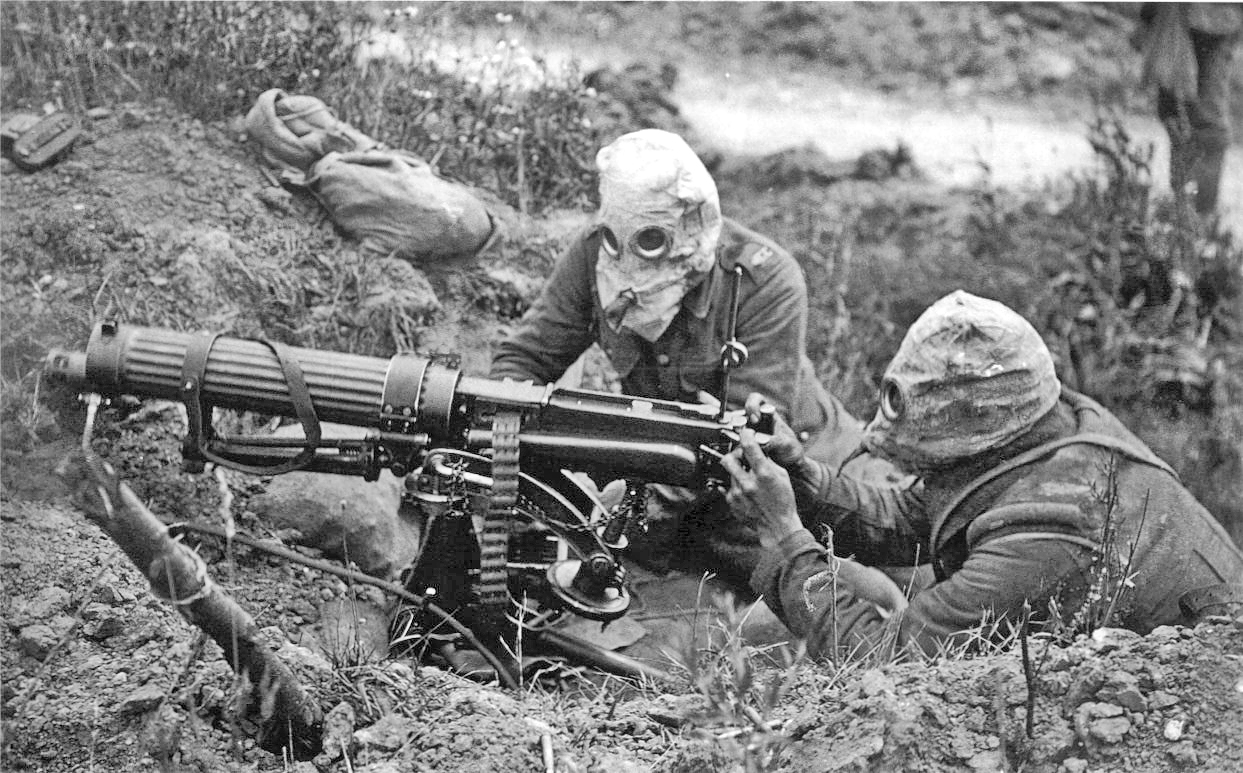
Besides rifles, machine guns were also used. They needed 4-6 men to operate them but they had the power of 100 guns! The only drawback to machine guns is that they need a flat surface to function on. 
Another weapon that was frequently used was the mortar, which was essentially tube designed to fire projectiles up into the air in the enemy's direction so that the projectiles fell down directly on top of the enemy. As the projectiles easily conquers trench walls, the mortar was ideal for trench warfare, making it a popular weapon of choice by both our allies and our enemies. 
While machine guns and mortars sound scary, the most horrifying and feared weapon is actually poison gas. This may sound absurd but poison gases has been used by the Germans to murder us. The first time poison gas was used in battle was during the Battle of Ypres, a few months before I had enlisted. I heard that the Germans used chlorine gas which burning sensations in the throat and chest pains. You die by suffocation. An even more terrifying gas than chlorine gas is mustard gas, which was fired into our trenches in shells. It is colourless and takes up to 12 hours to take effect. It causes the blistering of skin, vomiting, sore eyes and eventually internal and external bleeding. The worse part is, it can take up to five weeks for death to claim the vitims.

Enough with me grossing you out with the morbid talk. Take care of yourself. I love you..

                                                                                                         Yours,
                                                                                                             George Wright

-------------------------------------

Sources:

http://www.historyonthenet.com/WW1/weapons.htm

http://en.wikipedia.org/wiki/List_of_infantry_weapons_of_World_War_I


Trench Warfare

Dear Melenar,

I am now off-duty so I will be spending this time writing to you. While I have gotten used to the stench of the trenches, I am still repulsed by the awful smells. The mixture of scents of rotting carcasses, overflowing latrines, poison gases, stagnant mud, cigarette smokes and cooking food continues to bombard our sense of smell. There is also the continuous firing of guns and mortars.

Our day usually starts off with stand to, for which starts an hour before dawn. During this time, the soldiers stand at the front steps of our trenches to guard against potential enemy raids at dawn. Although both sides expect raids, there are still many raids that occur. As light grew, morning hate starts and tensions of the night are broken by machine gun fire, shelling, and small arm fire. After stand to occurs, there is often breakfast peace during which both sides ceased firing during breakfast. This will eventually be broken by officers. During the day, I spend much of my time underground, digging and digging and digging. My duty is to dig tunnels to the enemy trenches and to plant explosives in them. Often, the weather would be horrible and it would be damp underground. My back would ache and my muscles will be sore for spending hours bent over in the small tunnels. At the end of the day, there is another stand to and finally, at night, men from the front lines are relieved and the rear lines are sent to fetch rations and water. The firing and supporting trenches exchange places every 48 hours; after 4 days, retire for 4 days. Also, patrols are sent out at night into No Man's Land to repair the barbed wired fences and to attend to listening posts. I usually do not take part in these duties as I am a sapper. The following morning, this routine is once again repeated.


Trench warfare is quite arduous as little ground is gained over a long period of time and at the cost of many lives. From the day I arrived here to now, we have not made any progress toward the enemy trenches. The battle of attrition taking place right now has never before been seen in this world. My instincts, unfortunately, tells me that there are many more to come. I must return back to my duties now. I miss you and the children. Please take good care of yourself.

Thinking of you,
George Wright

-------------------------------

http://www.firstworldwar.com/features/trenchlife.htm

Life in the Front Lines

Dearest Melenar,

It has been a few weeks since we have arrived in Europe and currently, we are living in trenches in the middle of nowhere in France. The living condition here is atrocious. There are no words that could possibly describe the utter filth we are forced to live in. It is simply hell on earth. Lice runs rampant in the front lines. We spend most of our time off-duty delousing but there is too much to deal with. Often, we have to bury, burn or sink our clothes into water because there are far too much lice to salvage our garments. As a preventative measure against lice, we wear silk undershirts.

In addition to lice, we also have a huge problem with rats. These rats are nothing like the ones at home, Melenar. It is almost as if they are their own species. There are two types of rats: black rats and brown rats. Now the black rats are what one might expect when they think about rats. The brown rats, however, are an absolute nightmare. They gorge themselves on the eyes and flesh of soldiers and in some cases, grew to be the size of domestic cats! The worst thing is, each of these monstrous rats have ability to potentially produce 880 offspring a year.

Everyday after breakfast, we would all be subjected to inspection and then we would be assigned to certain chores such as refilling sandbags, repairing duckboards on the floor of the trench, or draining the trenches. While not on duty or completing chores, boredom infiltrated the entire troop. To preoccupy ourselves, we play blackjack, poker, seven-toed Pete or football. Many of us write letters home as I am doing now to keep ourselves sane. We do everything we can to escape from this nightmare.

In the front lines, all the soldiers take turns being on sentry duty which consists of standing on the front steps of our trench and waiting for the enemy to make any moves. The constant bombardment by the enemy causes sleep deprivation. At night, soldiers patrol No Man's Land and our barbed wires there. It is also during the nighttime that troops are relieved and rotated. As a sapper, I am rarely put on these patrols; my duty is to dig tunnels to enemy trenches to plant explosives.

What drove me crazy when I first arrived was the stockpile of human carcasses that were left not buried due to lack of time. The stench of rotting bodies coupled with the odors from the overflowing latrine overwhelms all men when they first arrive but somehow, we all slowly become immune to it. Sometimes, poison gases are also apparent in the trenches and we have to wear gas masks for days on end. I am glad that you will never be able to experience these horrors of war.

I must return to my duties now. Please reassure the children that I am well.

                                                                                         Much love,
                                                                                                   George Wright

----------------
Sources:

http://trenches.jynx.ca/?page=trenches

http://h2g2.com/approved_entry/A21605979

http://www.firstworldwar.com/features/trenchlife.htm


Enlistment

Dear Melenar,

          By the time you have received this letter, I would be on my way to the battlefield. I apologize the grief that I have caused you and I deeply regret leaving you on bad terms. I realized that I never properly explained to  you my reason for enlisting. Despite what you believe, I did not enlist to for adventure or glory but becuase I must fight for my country. I must protect you and the children from the bloodthirsty Huns. I cannot bear to live at home after the war, knowing that I could have done something for my country.
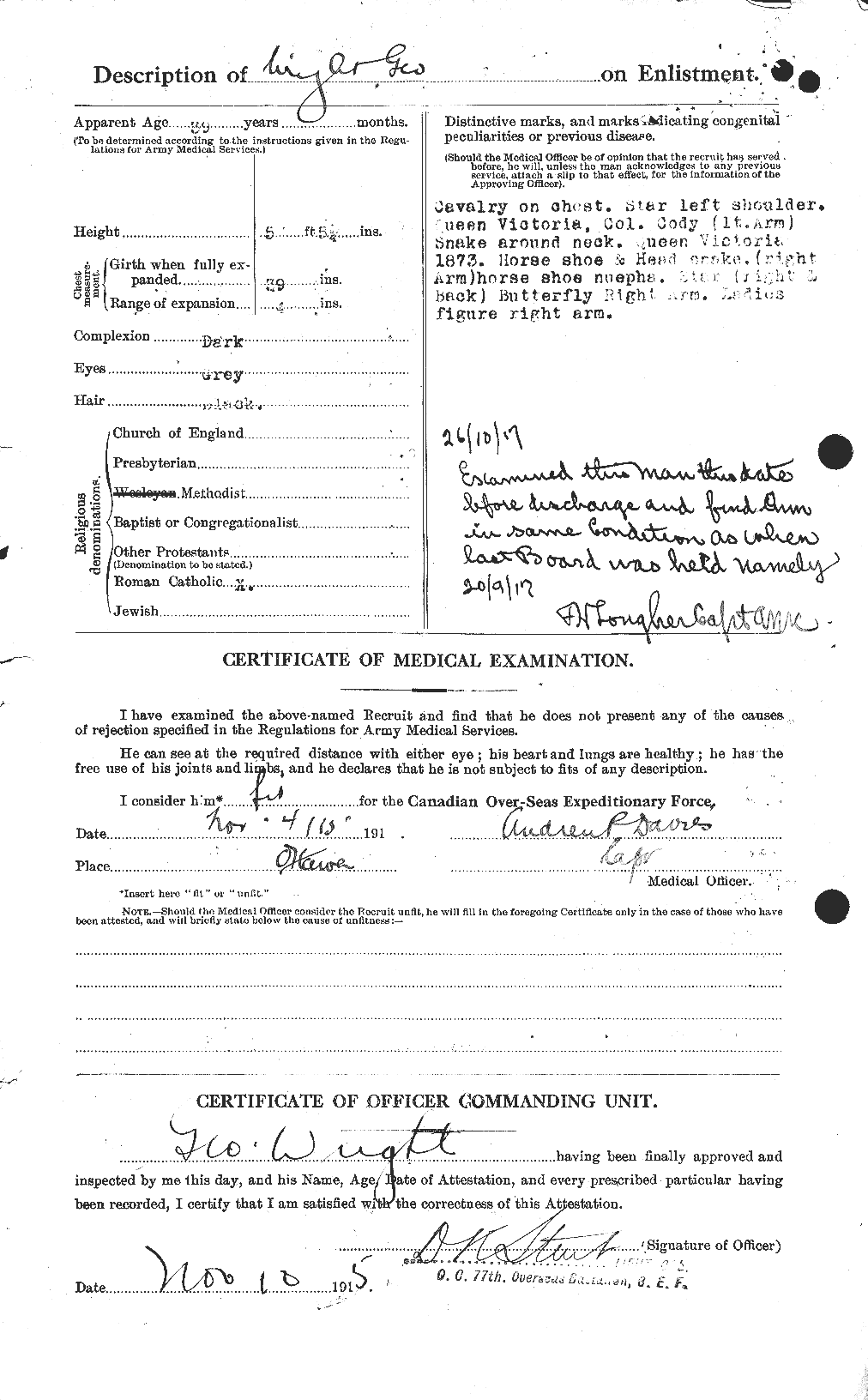
          I enlisted on November 4th, 1915 and have taken the oath in Ottawa. I will be serving overseas as part of the 77th Battalion Overseas in the Canadian Expeditionary Forces when we arrive in Europe for the duration of the war and perhaps another six months after, if required. During this time, I will be paid $1.00 per day and 10 cents field allowance. As I have a background in steam fitting and engrineering, I will be a military engineer or, a "sapper." From what the officers have told us, I gathered that my duty will be to dig tunnels under enemy trenches and planting explosives in them. 

          Please take care of yourself and our children while I am gone. You will receive an allowance of $20.00 a month to provide for our family. In the circumstance of my death, the government will provide a pension of $22.00 a month plus $5.00 for each of our children. Worry not, Melenar for the war will be over in a matter of monthes and I will soon return to you.

                                                                                       Yours truly,
                                                                                                  George Wright

---------------------------------

Sources: